Reviews
Reviews
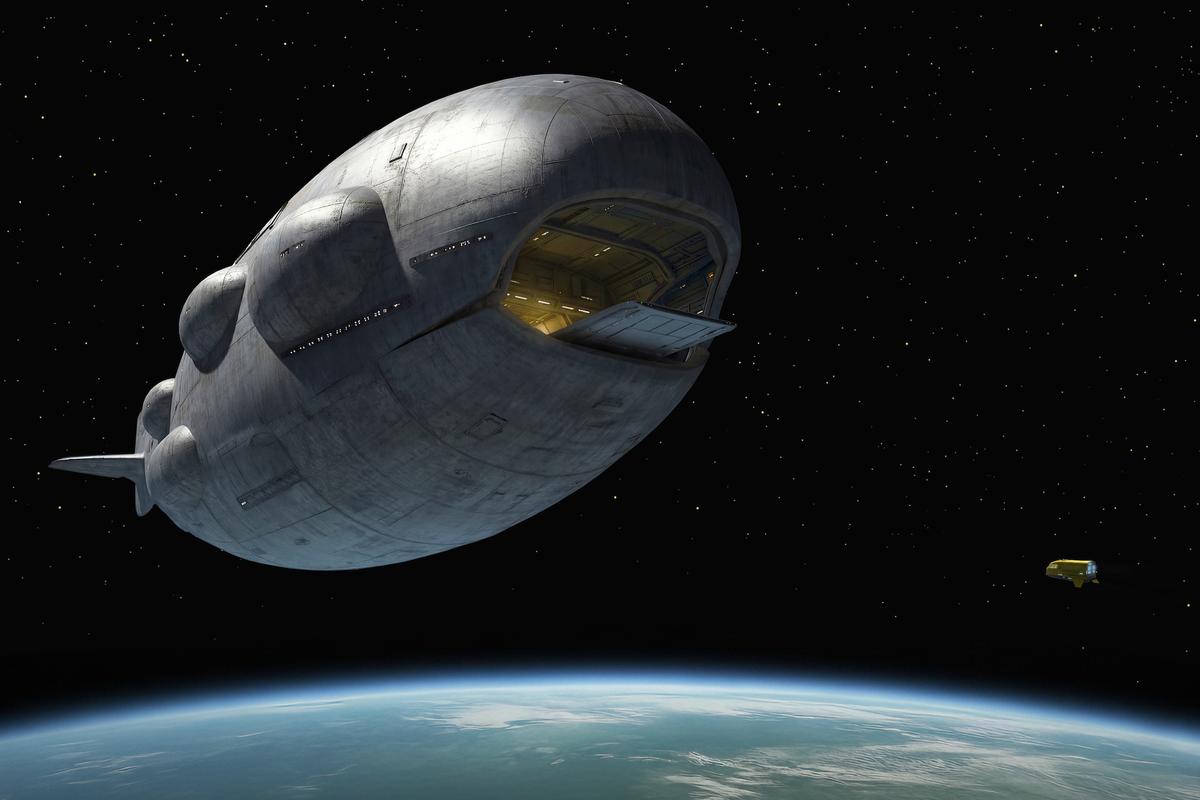
Two Mile Orca Brave Heart
LENGTH AT REST: 3,257m | DISPLACEMENT: 3,958,671 Mg | SENTIENCE LEVEL: ZERO | CREW: NA | STATUS: RETIRED
Reviews
I would love to hear what you think of Advances in the Art of Being and the characters you have got to know and love, or hate or even love to hate. If you have bought Advances in the Art of Being from a retailer such as Amazon as a hard copy, eBook, or audio book, then please consider leaving your review there. I will read it and copy the review and put it here so that it can help more people decide whether or not Advances in the Art is something they might enjoy.
This journey set in the year 2199 blurs the line between human and AI. Do yourself a favor before immersing yourself in this book, check out the EXPLORE THE ENCYCLOPEDIA link on Chris’s website. The timeline and encyclopedia connect our present day to this future world. This thoughtful resource introduces you to the main characters together with a myriad of new phrases, mannerisms and technical references from this future world. Can’t wait for the sequel!
Neil Parrott
A very timely novel at a point when technology seems to be becoming ever more central to our lives. It is packed with imaginative future technologies, but it never loses sight of the human questions underneath them. The book explores whether technological progress can really overcome fear, loss, memory and what it means to be human. It is thoughtful and intelligent, with a good sense of humour and an immersive world that draws the reader in.
I Nilsson
I love this book! If you love ambitious science fiction that combines galaxy-spanning adventure, artificial intelligence, mystery, and big philosophical ideas, this is a remarkable journey worth taking.
What begins as a rescue mission for a group of stranded scientists quickly unfolds into something far larger: a centuries-long game of prediction, manipulation, and survival, where the fate of civilizations may rest on the choices of a handful of characters. The novel excels at creating a vast and believable future, filled with fascinating technologies, living starships, artificial people, machine intelligences, and political forces operating on a scale that feels truly cosmic.
One of the book’s greatest strengths is its characters. Gundel, Arkil, Mungo, Susche, and the enigmatic Courier are far more than vehicles for the plot. They bring heart, humor, and humanity to a story packed with grand ideas. The Courier itself becomes one of the most memorable characters in the novel—an intelligence created for a single purpose, yet increasingly questioning destiny, free will, and the value of its own existence. What I love most is the fact that Chris uses alien and artificial life to explore what it means to be human.
The story continually raises the stakes, layering mysteries upon conspiracies and revelations upon revelations. Just when you think you understand the true nature of the conflict, the narrative expands again, revealing deeper motivations and larger forces at work. The result is a book that rewards attention and keeps you eager to discover what lies beyond the next chapter.
Most impressive of all is the sense of scale. Few novels manage to feel both deeply personal and unimaginably vast, but this book succeeds. It explores questions about fate, consciousness, technology, and what it means to be alive, while never losing sight of the characters fighting to survive within that immense universe.
By the final pages, the novel delivers the feeling that the very best science fiction provides: wonder. It leaves you thinking about its ideas long after you've finished reading while also making you eager to return to its universe. Advances in the Art of Being is a bold, intelligent, and highly imaginative space opera that feels like classic science fiction in scope, while remaining fresh, modern, and emotionally engaging. An outstanding read for anyone who enjoys big concepts, memorable characters, and stories that dare to think on a galactic scale. So, I highly recommend it in book or audio copy. I purchased both.
Jeromy Warner
I thought this was a superbly ambitious piece of sci-fi, especially for a first novel. It is really well written. The concept of hard determinism is cleverly woven through the book. I loved the way that the story takes you through the different characters’ journeys.
The world-building is on another level, it is at the same time dense, strange, but utterly convincing and real. You feel like you are there and it all could be happening right now. I felt more as though I was stepping into a future that already existed as if it was almost a history lesson. The people in the story feel like real people and I felt sorry for the courier, a super intelligent credit card sized drone that spends the story thinking up ways of avoiding its own predetermined demise as everyone around it carries on their own predetermined path.
The way the way the book is written, it feels very current with the story chapters interspersed with news broadcasts and the machine politicians arguing amongst themselves about how they are going to control things. I am now looking forward to the “post-present” in the hope of the next chapter of Arkil’s life.
Rachel (Amazon)
Chris Barnardo’s Advances in the Art is an ambitious, cerebral work of science fiction that feels both classic and strikingly modern at the same time. From the opening pages, where a seemingly simple walk through a futuristic London reveals layers of technological and philosophical depth, it becomes clear this is not just a story, but a carefully constructed universe with ideas at its core.
The novel carries the imaginative richness of Ray Bradbury, the conceptual precision of Isaac Asimov, and the sweeping, speculative scale reminiscent of Cixin Liu. Barnardo blends these influences into something uniquely his own: a narrative that explores free will, determinism, technological evolution, and the uneasy relationship between humanity and its creations.
What stands out most is the book’s intellectual backbone. Concepts like predictive timelines, machine intelligences competing to forecast reality, and societies divided between technological integration and deliberate disconnection are handled with impressive depth. Yet, despite the complexity, the story remains engaging through vivid characters like Mukarne and the intriguingly self-aware “Courier,” whose existential reflections add an unexpected emotional layer.
There’s also a subtle philosophical tension running throughout—are we shaping the future, or merely playing out a script already written? That question lingers long after you’ve put the book down.
This isn’t a fast, action-driven sci-fi novel. It’s thoughtful, layered, and rewards readers who enjoy unpacking big ideas. If you appreciate science fiction that challenges you while still delivering immersive worldbuilding and compelling characters, this book is well worth your time.
Highly recommended for fans of intelligent, idea-driven sci-fi.
Thaddeus Tuffentsamer
Annoyingly good. My wife read it too and we had fun discussing it for days afterwards and brainstorming plot lines for the sequel.
Mark Rowbotham
Quite incredible. What a sophisticated and wild imagination Chris Barnardo has, I loved it and got engrossed in the book, whilst believing that it was telling the future, not fiction. I think Chris must be an MI full of mini-awesomes.
A lot of times, I was thinking to myself, how the hell does someone come up with all this stuff.
Robert Fisher
You know the sort of book you’re reading when people ask you to go out and you don’t want to because you want to finish the book, well it was like that. I’d buy the next one. (I’m a big Iain Banks fan)
Martin Norman