
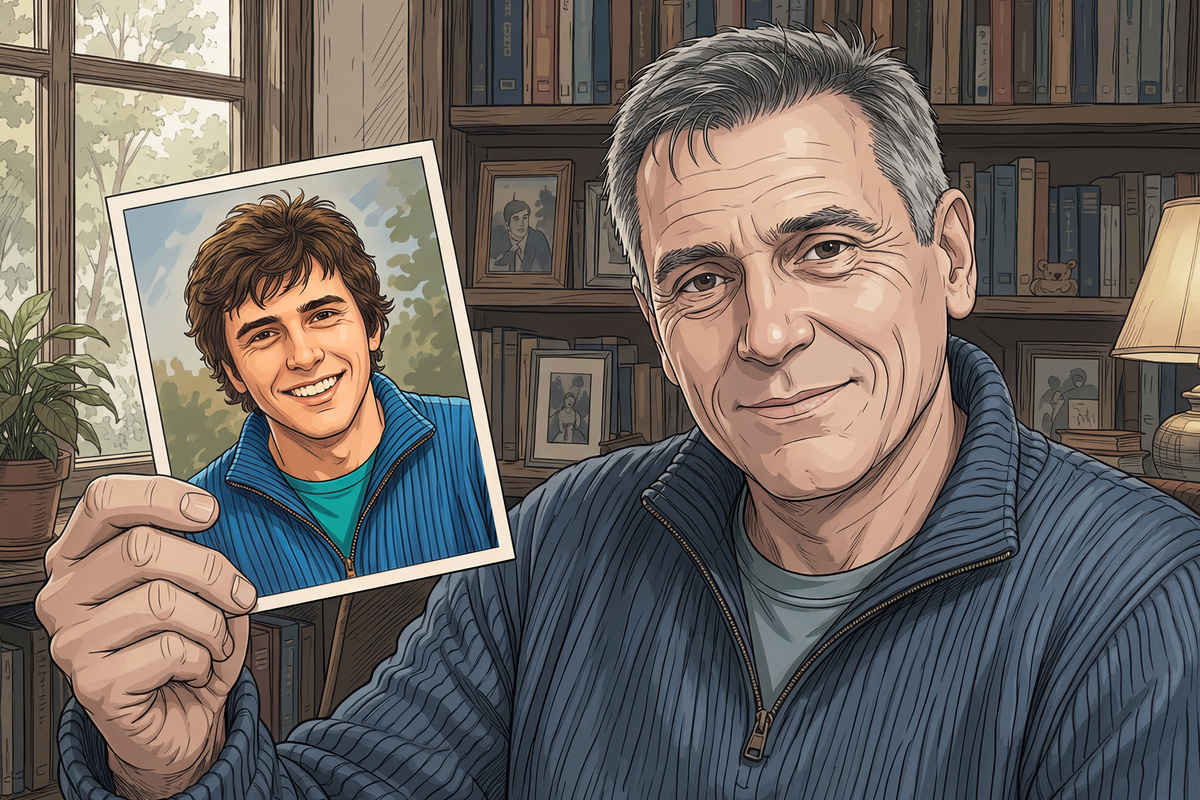
You can live forever
What age do you choose?
Medicine is advancing to the point where it can stop aging permanently, or even reverse it; the same drugs and therapies that halt aging may gradually repair the body, restoring youth, vitality and health. When that happens what age would you choose to be? Eighteen; twenty-something; thirtyish; fifty five? I suspect most people think they already know their answer right away. Twenty-five, or perhaps, thirty at a push to add a bit of gravitas to that youthful look. But I'm not convinced those would be the most popular choices.
In Advances in the Art of Being, the retroaging medical breakthrough has not only already occurred, but has been ubiquitously adopted. For those of us, alive now, such science fiction advances are tantalisingly close to becoming reality. So this is not some idle thought experiment, in the next couple of decades, people alive today will be confronting this exact question.
As those prescriptions become universally available, not only you, but more importantly everyone else, will have the same choice of how they look and how old they appear. Any advantage you had by choosing a particular circa age for effect will be lost. When that happens, how does the world of social interaction work when everyone has chosen their own preferred age?
Many of our interactions with the people around us, the social tramlines that keep society functional, are driven by judgements we make when we look at someone. When we meet someone for the first time, subliminal questions run through our mind as we talk. Are they old enough and experienced enough to take on the job we want them to do? Are they young and strong enough to be our friend or partner? Are their life experiences likely to match our own? Will we have anything in common? Do they need my help, or actually should they be helping me?
Quite apart from twin issues of the flatlining birth rate, as life expectancy accelerates past the 200 year mark, and the dilemma of what we are going to do with all the extra time in our lives, what will be the social consequences when we no longer know how to behave towards someone? Do you automatically respect someone who looks older? Or is that sort of summary judgement even tolerated in a world of free choice, where people can look as old or as youthful as they want irrespective of their birth age. If you interact with someone based on their perceived look or circa age, does that end up being a form of social discrimination. Do you still flirt with someone just because they're attractive? What if everyone is attractive? Right now we judge people we meet on such a visceral, animal level, using a whole range of cues about an individual by the way they look and how old they are. These are judgemental shortcuts that have evolved over hundreds of thousands, perhaps millions of years, so how will we cope with the changes that will rip through society in an evolutionary blink of an eye? How will we be able to judge how much they know, how well they have looked after their body, the life they have led, their experience or lack of it?
In the future, such judgements will be inevitably wrong, reckless even. Or perhaps in the future when the retroaging dust has settled, no one will care, and age will have become as meaningless as eye colour.
Today, right now, things are different. The discrimination of ageism is riven through our society. But how unfair is this? When people look at you, I guarantee how old you look to them is not how old you feel inside as you stare back at them. If you are young, no doubt you want to be taken seriously, you feel that you know your mind and want to be heard, yet all they see is your youth. On the other hand if you are old you look out of eyes that still feel as young as they ever were and no one sees you as the twenty something that you have always felt inside.
The first generation to embrace endless life and retroaging would almost certainly judge one another by the ages they chose to look. Choosing to appear twenty-five might signal ambition. Fifty-five might project authority. Seventy could imply wisdom. But fifty years later, when every appearance has become a personal choice rather than a consequence of biology, those signals would disappear and in the end that would all even out.
When every person is biologically healthy and age is not relevant, then appearance would quite quickly lose its meaning. The same way we no longer care whether someone has naturally curly hair or straight hair, blue or brown eyes. The novelty will fade and then we will stop seeing age as important.
Okay then, let’s head back to the premise…
You can live forever. What age do you choose?
28 Jun 2026